Libraries
780+ HR templates
Everything your business needs to stay compliant
Policies, contracts, letters, guidance and HR support tools for UK employers.
View full libraryPolicies, contracts, letters, guidance and HR support tools for UK employers.
View full libraryThe Return to Work Interview Script provides a practical framework for managers and HR professionals to conduct a consistent, supportive return-to-work discussion after sickness absence. It guides the conversation through the employee's absence, readiness to return, any support or adjustments required, work updates and appropriate follow-up, while helping identify underlying attendance issues.
Use this template to:
<p>If you are managing sickness absence, the toolkit brings together practical HR templates covering absence reporting, return-to-work meetings, reviews, support and formal action.</p>
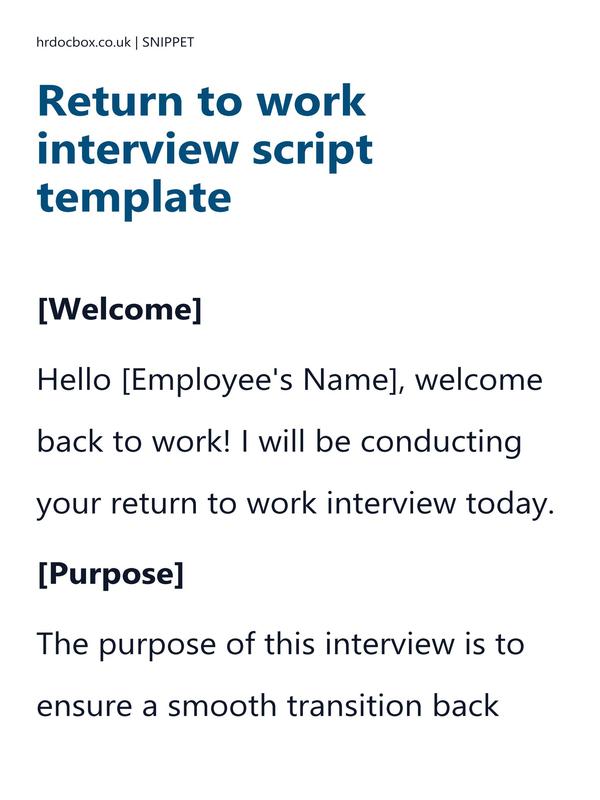
This template brings together the key information, sections and considerations you need to create a clear, comprehensive and professional HR document. Preview the document below.
1 Before the meeting
1.1 Review the employee's absence record, any previous return-to-work discussions and relevant information provided during the absence. Check any fit note recommendations or agreed arrangements and ensure the discussion will take place privately.
1.2 The meeting should normally be a supportive management conversation rather than a disciplinary meeting. If concerns about attendance need to be addressed separately, explain the appropriate process rather than attempting to deal with everything during the return-to-work discussion.
2 1. Opening the meeting
2.1 "Thanks for meeting with me. The purpose of today's conversation is to check that you're well enough to be back at work, see whether you need any support and make sure you've got everything you need to get back into work comfortably."
"This is also an opportunity to talk through your absence and anything we need
You've seen 20% of how the Return to work interview script template is structured. Get the complete editable template instantly and customise it for your organisation.

A Return to Work Interview Script gives managers a clear framework for talking with an employee after sickness absence. It helps the manager check that the employee is ready to return, understand whether any support is needed and identify anything that may affect their ability to remain at work.
The script can be adapted for short-term and longer absences and used alongside the organisation's sickness absence policy and return-to-work form.
A return-to-work discussion provides an opportunity to understand the circumstances behind an absence, identify support needs and make sure the employee is properly brought up to date when they return.
It can also help managers identify recurring patterns or underlying workplace issues that may require further action, without turning every return-to-work discussion into a formal attendance meeting.
The script is suitable for line managers, HR professionals and anyone responsible for managing sickness absence. It is particularly useful for managers who need a consistent structure for return-to-work conversations.
Any agreed support, phased return, reasonable adjustments, occupational health referral or follow-up should be recorded and reviewed. Where the discussion identifies a more significant attendance, health or employee relations issue, the employer should follow the appropriate procedure rather than attempting to resolve it through the return-to-work interview alone.
Related HR resources and workflow
Explore the HR resources that may be relevant before and / or after using the Return to work interview script, helping you understand the wider process, maintain appropriate documentation and follow a consistent approach.

A manager's guide to return to work interviews helps UK employers conduct consistent, supportive discussions with employees following sickness absence.

The Return to Work Interview Form provides managers with a structured way to discuss an employee's return following sickness absence.
Use these best practice actions, recommended timescales and process stages to understand when and how the Return to work interview script should be used, helping ensure each step is handled consistently and appropriately documented.
Understand the common mistakes to avoid when using this HR template, helping you reduce risk, prevent unnecessary costs and ensure the process is handled correctly.
No. ACAS says a return-to-work meeting is not a legal requirement, but recommends talking with an employee when they return from sickness absence because it provides an opportunity to check they are ready to return and identify any support they need. (https://www.acas.org.uk/returning-to-work-after-absence)
The discussion should normally cover how the employee is feeling, whether they are ready to return, whether they need support or adjustments, and whether anything about the absence or work needs to be discussed. ACAS recommends preparing questions in advance and keeping the conversation private. (https://www.acas.org.uk/returning-to-work-after-absence)
Yes, where appropriate. ACAS identifies return-to-work meetings as an opportunity to identify trends and underlying causes of absence. However, any formal attendance management should be handled through the organisation's appropriate process. (https://www.acas.org.uk/reducing-absence)
HRDocBox combines deep HR knowledge, practical application and years of experience with real workplace absence management. The script balances the need for consistent absence management with a supportive conversation about wellbeing, adjustments and a sustainable return.
AI can generate a list of return-to-work questions, but effective absence management requires more than asking why someone was off. HRDocBox combines UK employment-law knowledge, ACAS guidance and practical HR experience to structure the conversation around support, adjustments, confidentiality and appropriate follow-up.
It should be detailed enough to establish that the employee is ready to return and identify any support required, without becoming an unnecessary investigation into their medical history. ACAS recommends a private, sensitive discussion focused on the employee's return and support needs. (https://www.acas.org.uk/returning-to-work-after-absence)
How this content is developed and reviewed
The Return to work interview script template is developed using a practical HR methodology that considers current UK employment legislation, ACAS guidance, CIPD good practice and the real-world HR process it supports. Templates and supporting information are regularly reviewed and updated, with additional reviews triggered by significant changes to legislation, guidance or established HR practice, helping ensure each document remains practical, relevant and suitable for UK employers.
Darryl Horn, Chartered HR Director
Darryl is a Chartered HR professional with over 25 years' experience in senior HR and employee relations roles.
He has extensive practical experience of managing sick management HR processes and founded hrdocbox to provide businesses with practical, professionally developed HR resources grounded in UK employment law and best practice.
HRDocBox has been creating practical UK HR documents since 2009.
"Darryl provides support and advice with excellent judgement, and has a strong understanding of people, policies and UK employment legislation."
"He is someone I trust; consistent, dependable, and committed to doing things properly."

















Whether you employ 5 people or 50, hrdocbox gives you the structure, documents and expertise needed to manage employees professionally and legally.
Professionally written and fully compliant with UK employment law
Access a free contract template instantly - or save 10% on any document today.
Use this code at checkout for 10% off anything!
Includes instant download, updates, and full access to your HR templates.