Libraries
780+ HR templates
Everything your business needs to stay compliant
Policies, contracts, letters, guidance and HR support tools for UK employers.
View full libraryPolicies, contracts, letters, guidance and HR support tools for UK employers.
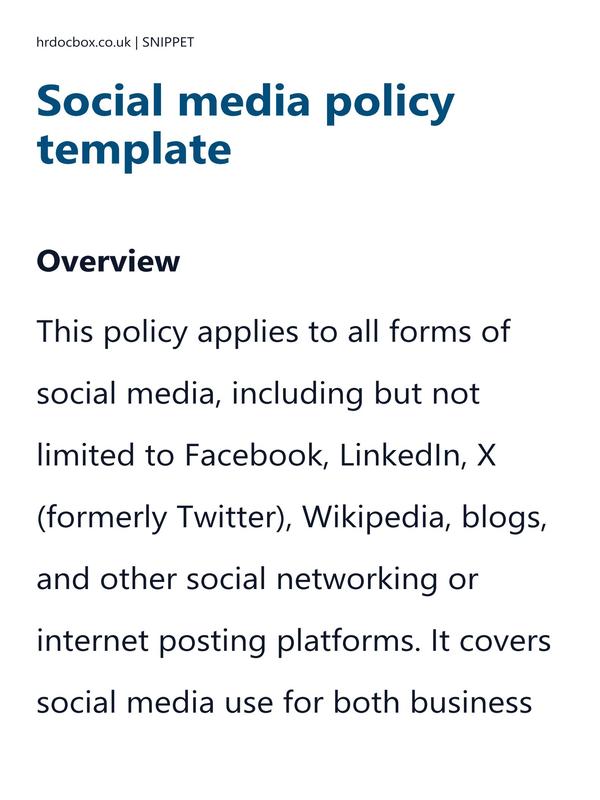
View full libraryThe Social Media Policy Template provides clear rules for the responsible use of social media by employees, covering both personal and work-related activity. It helps employers protect confidential information, reputation and working relationships while setting reasonable expectations around professional conduct, privacy and online behaviour.
Use this template to:
If you are establishing clear workplace standards, these conduct policy templates give you a practical set of policies covering expected behaviour, employee responsibilities and managing concerns.
1 Overview
1.1 [Company Name] recognises that social media is an important part of modern communication and can be valuable for both employees and the organisation. This policy sets out reasonable expectations for the use of social media and aims to protect employees, customers, colleagues and the Company's confidential information and reputation.
1.2 The policy applies to social media used for work purposes and to personal use where there is a connection with the Company, its employees, customers, suppliers or other business relationships.
2 Scope
2.1 This policy applies to all employees of [Company Name] and, where appropriate, may also apply to agency workers, contractors and other individuals working on behalf of the Company.
2.2 It applies to social networking websites, professional networking platforms, blogs, forums, video and image-sharing platforms, messaging services and any other online service where individuals can publish, share or exchange content.
3 General principles
3.1 Personal use of social media
3.1.1 Employees are free to use social media in their personal time, provided that their use does not breach this policy or any other Company policy or employment obligation.
Employees should remember that content published on personal accounts may
You've seen 20% of how the Social media policy template is structured. Get the complete editable template instantly and customise it for your organisation.
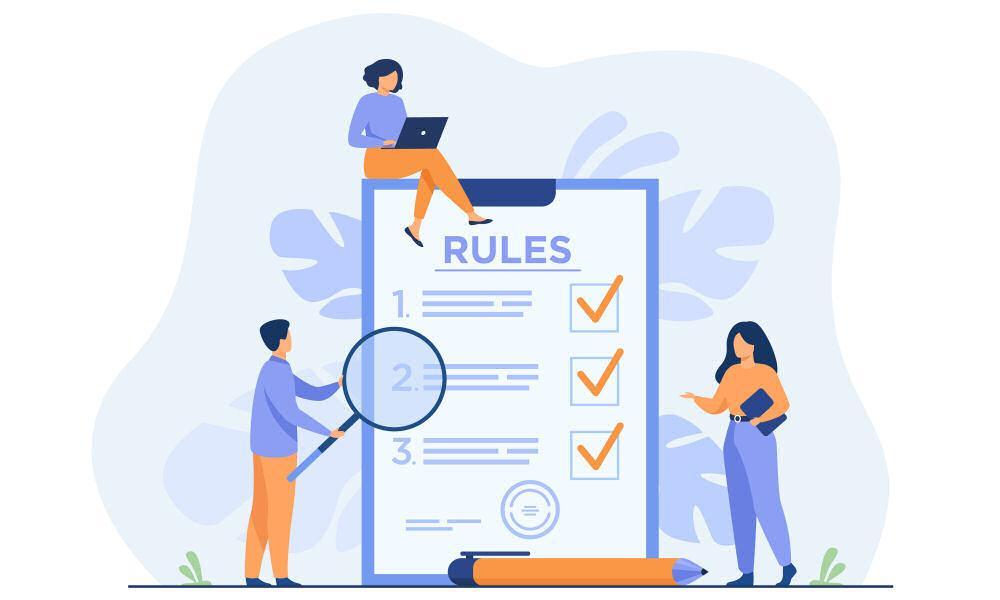
A Social Media Policy sets out how employees are expected to use social networking sites and other online platforms where their activity may have a connection with work. It establishes sensible boundaries around confidentiality, professional conduct, personal use and the Company's reputation.
The policy recognises that employees have personal lives and social media accounts while making clear that certain online behaviour can have consequences for working relationships and the organisation.
The policy gives employees and managers a clear framework for dealing with common social media issues, including inappropriate comments about colleagues, disclosure of confidential information, unauthorised use of company accounts and excessive personal use during working time.
It also helps distinguish legitimate personal expression from conduct that may have a genuine connection with the workplace and require an employer's response.
The policy is suitable for employers, HR professionals and managers in organisations where employees have access to social media at work or use social media in their personal lives.
It is particularly useful for organisations that want to establish clear expectations without attempting to prohibit reasonable personal use of social media altogether.
The policy should be communicated to employees and supported by appropriate guidance for managers. It should also sit alongside related policies covering equality, bullying and harassment, disciplinary action, confidentiality, data protection and acceptable IT use.
Employers should review the policy periodically because the platforms employees use, the risks they create and the legal and regulatory environment can change.
Related HR resources and workflow
Explore the HR resources that may be relevant before and / or after using the Social media policy, helping you understand the wider process, maintain appropriate documentation and follow a consistent approach.

The Equal Opportunities Policy provides specific protection to the Company in respect of the Age Discrimination Regulations that came into force in October 2006.
Our Bullying and Harassment Policy Template combats workplace mistreatment, fostering a safe and respectful environment for all employees.
Use these best practice actions, recommended timescales and process stages to understand when and how the Social media policy should be used, helping ensure each step is handled consistently and appropriately documented.
Understand the common mistakes to avoid when using this HR template, helping you reduce risk, prevent unnecessary costs and ensure the process is handled correctly.
Not everything an employee says or does online is a workplace matter. The employer should consider whether the activity has a sufficient connection with work, whether it breaches a legitimate workplace obligation and the circumstances of the individual case.
Potentially, but it depends on the circumstances. An employer should consider the content, its connection with work, its impact on colleagues or the organisation and the employee's explanation. ACAS guidance recognises that personal social media activity can become relevant where it affects workplace relationships or the employer. :contentReference[oaicite:7]{index=7}
Employers should be very cautious about monitoring personal accounts. The ICO says monitoring must have a clear purpose and should not be carried out simply "just in case". The nature and extent of monitoring should also be explained to workers. :contentReference[oaicite:8]{index=8}
HRDocBox combines deep HR knowledge, practical application and years of experience with real workplace issues. The policy is designed to give employers sensible boundaries around social media while recognising that employees have personal lives and legitimate rights outside work.
AI can produce a generic list of social media rules, but a useful workplace policy needs to balance employment law, equality, data protection, confidentiality, employee rights and practical employee relations. HRDocBox combines those considerations with practical HR experience rather than simply generating generic wording.
Yes. It should work alongside policies covering equality, bullying and harassment, disciplinary matters, confidentiality, data protection and acceptable IT use. ACAS specifically recommends ensuring social media policies are consistent with other workplace policies. :contentReference[oaicite:9]{index=9}
How this content is developed and reviewed
The Social media policy template is developed using a practical HR methodology that considers current UK employment legislation, ACAS guidance, CIPD good practice and the real-world HR process it supports. Templates and supporting information are regularly reviewed and updated, with additional reviews triggered by significant changes to legislation, guidance or established HR practice, helping ensure each document remains practical, relevant and suitable for UK employers.
Darryl Horn, Chartered HR Director
Darryl is a Chartered HR professional with over 25 years' experience in senior HR and employee relations roles.
He has extensive practical experience of managing conduct HR processes and founded hrdocbox to provide businesses with practical, professionally developed HR resources grounded in UK employment law and best practice.
HRDocBox has been creating practical UK HR documents since 2009.
"Darryl provides support and advice with excellent judgement, and has a strong understanding of people, policies and UK employment legislation."
"He is someone I trust; consistent, dependable, and committed to doing things properly."











Whether you employ 5 people or 50, hrdocbox gives you the structure, documents and expertise needed to manage employees professionally and legally.
Professionally written and fully compliant with UK employment law
Access a free contract template instantly - or save 10% on any document today.
Use this code at checkout for 10% off anything!
Includes instant download, updates, and full access to your HR templates.