Libraries
780+ HR templates
Everything your business needs to stay compliant
Policies, contracts, letters, guidance and HR support tools for UK employers.
View full libraryPolicies, contracts, letters, guidance and HR support tools for UK employers.
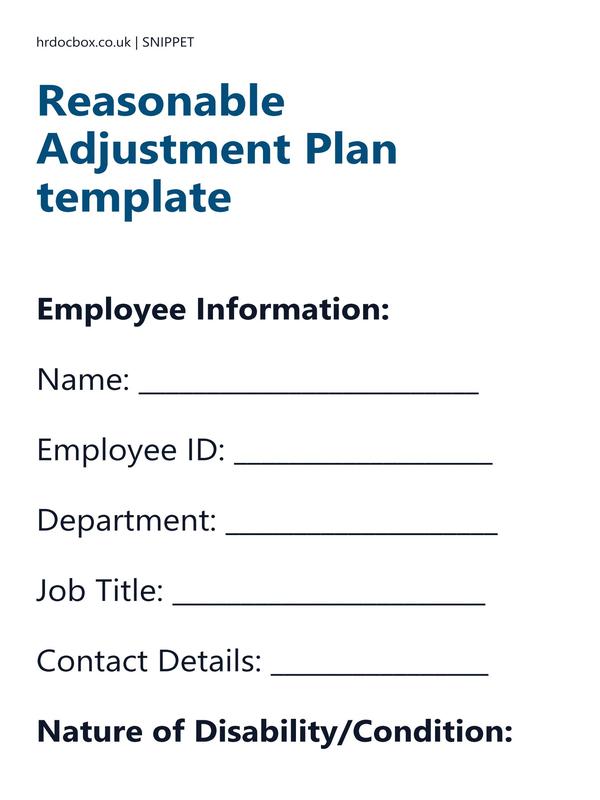
View full libraryA practical reasonable adjustment plan for recording agreed workplace adjustments, the disadvantage they address, who is responsible for implementing them and when they should be reviewed.
Use this template to:
If you are supporting employee wellbeing, the toolkit brings together practical HR templates covering wellbeing needs, assessment, support, communication and review.
This plan records the reasonable adjustments agreed to support the individual at work. It should be discussed with the individual and reviewed when circumstances change or at the agreed review date.
| Employee / worker name: | |
| Job title: | |
| Department / team: | |
| Line manager: | |
| Date plan agreed: |
You've seen 20% of how the Reasonable Adjustment Plan template is structured. Get the complete editable template instantly and customise it for your organisation.

A Reasonable Adjustment Plan provides a practical written record of the workplace changes agreed to support an employee or worker who may be disadvantaged by a disability or health condition. It helps turn discussions about support into clear, practical arrangements that can be implemented and reviewed.
The plan provides space to identify the aspects of work that may create a disadvantage and record the adjustments agreed to reduce or remove that disadvantage. This helps keep the focus on the individual's needs and the practical impact on their work, rather than simply recording a medical condition.
Each adjustment can be recorded alongside details of how it will operate, who is responsible for putting it in place and when it should take effect. This makes the plan useful for both the employee and the people responsible for managing their day-to-day working arrangements.
Reasonable adjustments may need to change as an individual's circumstances, role or working environment changes. The plan provides a record of review dates, feedback and any amendments so that agreed support can remain appropriate rather than becoming a one-off arrangement.
The plan gives the employee, manager and HR a common reference point for understanding the agreed arrangements. It can also provide useful evidence of the organisation's consideration of reasonable adjustments and the steps taken to support the individual.
Related HR resources and workflow
Explore the HR resources that may be relevant before and / or after using the Reasonable Adjustment Plan, helping you understand the wider process, maintain appropriate documentation and follow a consistent approach.

Our Reasonable Adjustment Assessment Checklist Form Template helps evaluate and implement accommodations, ensuring fair treatment and accessibility for employees with disabilities.
Use these best practice actions, recommended timescales and process stages to understand when and how the Reasonable Adjustment Plan should be used, helping ensure each step is handled consistently and appropriately documented.
Understand the common mistakes to avoid when using this HR template, helping you reduce risk, prevent unnecessary costs and ensure the process is handled correctly.
The plan should record the workplace disadvantage being experienced, the adjustments agreed, how they will operate, who is responsible for implementing them and when they will be reviewed. It should contain enough practical detail for the arrangements to be understood and followed.
Not necessarily. An employer should consider the individual's circumstances and the disadvantage they are experiencing. A worker does not always need a formal diagnosis before support or reasonable adjustments can be considered, and employers should avoid unnecessarily delaying support while waiting for medical evidence. https://www.acas.org.uk/reasonable-adjustments
Yes. Adjustments should be reviewed where appropriate and can be changed if they are no longer effective, the individual's circumstances change or a different arrangement would provide better support. Any agreed changes should be recorded in the plan.
The individual should be involved in discussions about their adjustments, alongside their manager and HR where appropriate. Occupational Health or other professional advice may also be useful where the employer needs additional information to understand the individual's needs or possible adjustments.
No. The legal duty is to make reasonable adjustments, rather than every adjustment requested. What is reasonable depends on the circumstances, including whether the adjustment would reduce the disadvantage, its practicality, cost and impact on health and safety. If a requested adjustment is not reasonable, the employer should consider whether another adjustment could provide effective support. https://www.acas.org.uk/reasonable-adjustments
AI can produce a generic reasonable adjustment document, but an effective plan needs to focus on the individual's workplace disadvantage, the practical adjustments agreed and how those arrangements will be implemented and reviewed.
This HRDocBox template provides a structured UK-focused record for agreeing and managing reasonable adjustments, helping employers move from an informal discussion to clear, documented and reviewable workplace arrangements.
How this content is developed and reviewed
The Reasonable Adjustment Plan template is developed using a practical HR methodology that considers current UK employment legislation, ACAS guidance, CIPD good practice and the real-world HR process it supports. Templates and supporting information are regularly reviewed and updated, with additional reviews triggered by significant changes to legislation, guidance or established HR practice, helping ensure each document remains practical, relevant and suitable for UK employers.
Darryl Horn, Chartered HR Director
Darryl is a Chartered HR professional with over 25 years' experience in senior HR and employee relations roles.
He has extensive practical experience of managing wellbeing HR processes and founded hrdocbox to provide businesses with practical, professionally developed HR resources grounded in UK employment law and best practice.
HRDocBox has been creating practical UK HR documents since 2009.
"Darryl provides support and advice with excellent judgement, and has a strong understanding of people, policies and UK employment legislation."
"He is someone I trust; consistent, dependable, and committed to doing things properly."

















Whether you employ 5 people or 50, hrdocbox gives you the structure, documents and expertise needed to manage employees professionally and legally.
Professionally written and fully compliant with UK employment law
Access a free contract template instantly - or save 10% on any document today.
Use this code at checkout for 10% off anything!
Includes instant download, updates, and full access to your HR templates.