Settlement agreement cover letter template

£9.99
UK-specific Editable Instant download 12 months' updates

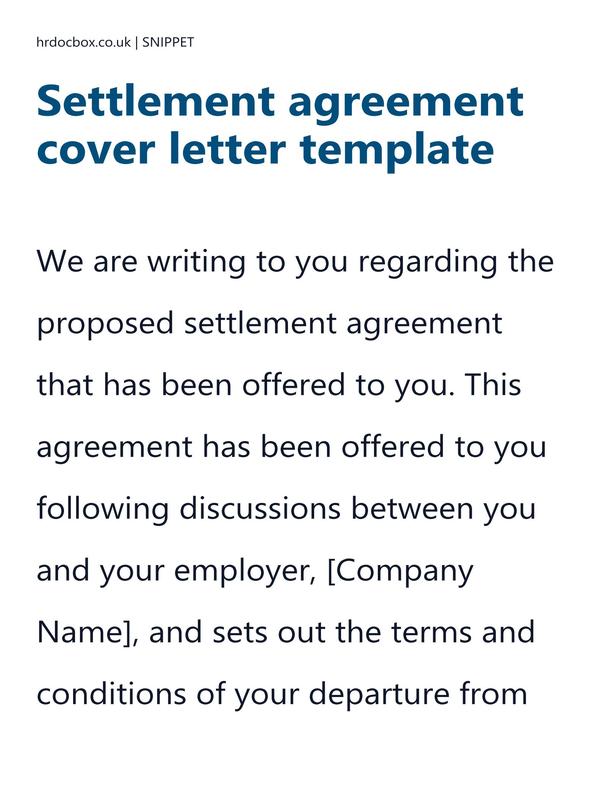
This Settlement Agreement Cover Letter provides a clear introduction to a proposed settlement agreement and explains the key arrangements for reviewing and considering the offer. It helps employers present the agreement professionally while making clear that the proposal is subject to contract and requires independent legal advice before it can become binding.

Use this template to:
  • Introduce a proposed settlement agreement to an employee
  • Explain the purpose and key terms of the proposed agreement
  • Confirm that the offer is subject to contract
  • Explain the requirement for independent legal advice
  • Confirm the proposed timescale for considering the agreement
  • Set out the arrangements for responding to the offer
Settlement agreement cover letter template
2026 Reviewed

What's included in this template?

This template brings together the key information, sections and considerations you need to create a clear, comprehensive and professional HR document. Preview the document below.

  • Introduction to the proposed settlement agreement
  • Summary of the proposed settlement arrangements
  • Independent legal advice requirements
  • Suggested consideration period and response arrangements
  • Confidentiality and subject to contract wording
  • Practical next steps for signing and completion

Your complete Settlement agreement resource

Templates. Knowledge. Guidance. Everything you need, all in one place.

Explore the Settlement agreement templates toolkit
Template

Download .doc

Copy [to paste]

Email

[Sender name]

[Sender address]

[date]

[Recipient name]

[Recipient address]


Dear [Recipient first name],

Without Prejudice and subject to S111A Employment Rights Act 1996

Further to our recent discussions, I am writing to provide you with a formal proposal to resolve the matters discussed and to bring your employment with [Company Name] to an agreed conclusion on the terms set out in the enclosed Settlement Agreement.

The proposed agreement sets out the terms on which the parties would agree to end your employment, including the proposed termination date, payment arrangements and any other agreed terms.

Proposed settlement

Subject to agreement and completion of the Settlement Agreement, the principal terms currently proposed are:

  • Proposed termination date: [date]
  • Settlement payment: £[amount]
  • Payment of salary and other contractual sums due up to the termination date
  • Treatment of outstanding holiday entitlement: [details]
  • Notice arrangements: [details]
  • Reference arrangements: [details, if applicable]

The enclosed Settlement Agreement contains the full proposed terms. In the event of any difference between this covering letter and the Settlement Agreement, the terms of the final Settlement Agreement will apply.

Independent legal advice

Before you can sign the Settlement Agreement, you will need to obtain advice from an independent adviser who

PREVIEW ENDS HERE

This is the end of the preview

You've seen 40% of how the Settlement agreement cover letter template is structured. Get the complete editable template instantly and customise it for your organisation.

£9.99
Specifications
Access 12 months, with updates
Length 2 pages • 441 words
Jurisdiction England, Wales, Scotland
Based on UK law, ACAS guidance
Last review 17/09/2026
Next review 17/03/2027
Delivery Instant digital delivery
Formats .doc · .txt · email

What is a settlement agreement cover letter?

Settlement agreement cover letter template preview

This cover letter provides a professional way to introduce a proposed settlement agreement and explain what the employee needs to do before deciding whether to accept it. It can accompany the formal agreement and provide useful context without attempting to replace the legal terms contained within the agreement itself.

Introducing the settlement proposal

The letter explains that the employer is making a formal settlement proposal and can briefly set out the circumstances in which the proposal is being made. The wording should remain factual and should not suggest that the employee is required to accept the offer.

Explaining the proposed terms

The cover letter can summarise the principal elements of the proposed settlement, such as the proposed termination date, settlement payment, treatment of salary and benefits, holiday arrangements and any agreed reference. The formal settlement agreement should contain the definitive contractual terms.

Independent legal advice

A settlement agreement can only validly waive specified employment tribunal or court claims where the statutory requirements are met, including the employee receiving advice from a relevant independent adviser. The letter can explain this requirement and identify any proposed contribution towards the employee's reasonable legal costs.

Allowing time to consider the offer

The employee should be given a reasonable opportunity to consider the written proposal and obtain independent advice. Acas's Code of Practice recommends allowing at least 10 calendar days to consider formal written settlement terms and obtain independent advice, although the appropriate period can depend on the circumstances.

Confirming the next steps

The letter can explain how the employee should respond, who they should contact with questions and what happens if the proposed terms are accepted. It should also make clear that the agreement is subject to contract and does not become binding until the relevant requirements have been satisfied and the agreement has been properly signed.

Example

An employer has decided that it would be preferable to agree an orderly end to an employee's employment rather than continue with an ongoing workplace dispute. Following an initial discussion, the employer decides to make a formal settlement proposal.

The employer prepares a settlement agreement setting out the proposed termination date, payment arrangements, treatment of outstanding holiday and salary, an agreed reference and the claims that the agreement is intended to settle. A cover letter is sent with the agreement explaining the proposal in straightforward terms.

The letter confirms that the proposal is voluntary and subject to contract and explains that the employee should obtain independent legal advice before signing. The employer offers to contribute up to an agreed amount towards the employee's reasonable legal costs and gives the employee at least 10 calendar days to consider the formal written terms.

The employee takes the agreement to an independent adviser and subsequently proposes a change to the termination date. The parties negotiate the amendment and, once the final terms are agreed, both parties sign the settlement agreement. The employer then implements the agreed termination and payment arrangements in accordance with the signed agreement.

The wider HR process

Related HR resources and workflow

Explore the HR resources that may be relevant before and / or after using the Settlement agreement cover letter, helping you understand the wider process, maintain appropriate documentation and follow a consistent approach.

Previous
Letters
Settlement agreement proposal letter

A carefully worded letter for employers who wish to open discussions with an employee about a potential settlement agreement and propose an agreed financial and employment exit arrangement.

This
Settlement agreement cover letter
Next
Agreements
Settlement agreement

A settlement agreement can provide a structured way for an employer and employee to agree the terms of resolving an employment dispute or bringing the employment relationship to an agreed end.

Premium content

To continue reading, purchase this item or a parent toolkit, library or our full library.

Implementation guidance

Use these best practice actions, recommended timescales and process stages to understand when and how the Settlement agreement cover letter should be used, helping ensure each step is handled consistently and appropriately documented.

Step Description Responsibility Timing
1 Agree the proposed settlement terms and obtain appropriate legal advice on the agreement and proposed arrangements before issuing the formal offer. Employer / HR / Legal Adviser Before issuing the formal offer
2 Send the cover letter together with the proposed settlement agreement and explain the key arrangements, independent advice requirement and response process. Employer / HR On making the formal offer
3 Allow the employee reasonable time to consider the proposal, obtain independent advice and raise questions or make a counter-offer. Employer / Employee Normally at least 10 calendar days
4 Consider any proposed amendments and negotiate the terms where appropriate before preparing the final agreement for signature. Employer / Employee / Advisers Within the agreed negotiation period
5 Confirm the final agreement has been independently advised upon and properly signed before implementing the agreed termination, payment and other arrangements. HR / Employer After all parties have signed
Premium content

To continue reading, purchase this item or a parent toolkit, library or our full library.

Common mistakes

Understand the common mistakes to avoid when using this HR template, helping you reduce risk, prevent unnecessary costs and ensure the process is handled correctly.

  • Making the proposal sound compulsory – make clear that settlement is voluntary and that the employee can reject or negotiate the proposal.
  • Giving too little time to consider the agreement – allow reasonable time for the employee to consider the formal terms and obtain independent advice.
  • Trying to make the cover letter legally exhaustive – the settlement agreement should contain the definitive legal terms and specific claims being settled.
  • Failing to explain independent advice – make clear that the employee must obtain advice from a relevant independent adviser before signing.
  • Using confidentiality wording too broadly – ensure confidentiality provisions are appropriate and do not purport to prevent disclosures that cannot lawfully be restricted.
  • Implementing the agreement before it is binding – wait until the final agreement has been properly agreed, advised upon and signed.
Premium content

To continue reading, purchase this item or a parent toolkit, library or our full library.

HR considerations

UK employment law and best practice

This template is designed to support the process, but the document should be used alongside the relevant HR procedure and applied to the circumstances of the individual case.

Settlement agreements and legal requirements

A settlement agreement is a legally binding contract and must be in writing. For it to validly waive relevant employment tribunal or court claims, it must relate to particular complaints or proceedings and identify the specific claims being settled. Simply stating that the agreement settles "all claims" is not sufficient. https://www.acas.org.uk/settlement-agreements

Independent legal advice

The employee must receive advice from a relevant independent adviser on the terms and effect of the settlement agreement and its effect on their ability to pursue the relevant claims. The adviser must meet the statutory requirements and must be independent of the employer. The agreement must also identify the adviser. 

Time to consider the proposal

Employers should give the employee a reasonable amount of time to consider the written offer and obtain independent advice. The Acas Code of Practice on Settlement Agreements recommends a minimum period of 10 calendar days as a general rule for considering formal written terms and obtaining independent advice. Additional time may be appropriate depending on the circumstances, including where reasonable adjustments are required. https://www.acas.org.uk/settlement-agreements/making-a-formal-offer

Voluntary settlement discussions

Settlement agreements are voluntary and an employee does not have to accept the proposal. Employees may negotiate the terms or reject the offer. Employers should explain the reasons for the proposal, what is being offered and that the employee is free to obtain independent advice before deciding whether to proceed. https://www.acas.org.uk/settlement-agreements/discussing-and-negotiating-an-offer

Confidentiality and protected conversations

Settlement discussions may be protected under section 111A of the Employment Rights Act 1996 in appropriate circumstances, but this protection has limitations. Employers should therefore avoid suggesting that all discussions are automatically protected in every situation. Any confidentiality provisions in the final agreement should also be drafted carefully and should not prevent disclosures that are legally protected, such as qualifying whistleblowing disclosures.

Subject to contract and completion

The proposed settlement should not be treated as concluded until the final agreement has been properly agreed and signed. Acas explains that "subject to contract" indicates that the draft agreement is not legally binding until the required conditions have been satisfied and the agreement has been signed, subject to the applicable law. Employers should ensure that the final agreement is legally accurate and obtain legal advice where appropriate.

You may also need these resources

FAQs

Is a settlement agreement voluntary?

Yes. An employee does not have to accept a settlement agreement. They can reject the proposal or negotiate different terms. Employers should make the voluntary nature of the proposal clear when making the offer.

How long should an employee have to consider a settlement agreement?

Acas recommends allowing at least 10 calendar days to consider formal written settlement terms and obtain independent advice. Depending on the circumstances, a longer period may be appropriate.

Does an employee have to get legal advice?

Yes, if the agreement is intended to validly waive the relevant employment tribunal or court claims, the employee must receive advice from a relevant independent adviser who meets the statutory requirements.

Should the employer pay the employee's legal fees?

There is no general legal requirement for the employer to pay the employee's legal costs. However, Acas notes that employers should consider offering a contribution towards the cost of independent advice, and the proposed contribution can be included in the settlement terms.

Can an employee negotiate a settlement agreement?

Yes. A settlement agreement is normally subject to negotiation. The employee can propose changes to matters such as the settlement payment, termination date, reference or other contractual terms before deciding whether to accept the final proposal.

Why use HRDocBox rather than AI?

AI can generate generic settlement correspondence, but settlement agreements involve specific UK employment law requirements and should be handled carefully. HRDocBox provides structured HR documentation designed around UK employment practice, helping employers present settlement proposals consistently while recognising where independent legal advice is required.

How this content is developed and reviewed

The Settlement agreement cover letter template is developed using a practical HR methodology that considers current UK employment legislation, ACAS guidance, CIPD good practice and the real-world HR process it supports. Templates and supporting information are regularly reviewed and updated, with additional reviews triggered by significant changes to legislation, guidance or established HR practice, helping ensure each document remains practical, relevant and suitable for UK employers.

About the author

Darryl Horn, Chartered HR Director

Darryl is a Chartered HR professional with over 25 years' experience in senior HR and employee relations roles.

He has extensive practical experience of managing settlement agreement HR processes and founded hrdocbox to provide businesses with practical, professionally developed HR resources grounded in UK employment law and best practice.

HRDocBox has been creating practical UK HR documents since 2009.

Executive recommendation

"Darryl provides support and advice with excellent judgement, and has a strong understanding of people, policies and UK employment legislation."

"He is someone I trust; consistent, dependable, and committed to doing things properly."

RB
Ruth Brock Chief Executive Officer The Hygiene Bank
Get started today

HR confidence starts here

Whether you employ 5 people or 50, hrdocbox gives you the structure, documents and expertise needed to manage employees professionally and legally.

Download your FREE UK employment contract template

Professionally written and fully compliant with UK employment law
Download FREE contract
Free UK employment contract template