Libraries
780+ HR templates
Everything your business needs to stay compliant
Policies, contracts, letters, guidance and HR support tools for UK employers.
View full libraryPolicies, contracts, letters, guidance and HR support tools for UK employers.
View full libraryThis long term absence dismissal letter provides a clear written record of a decision to end employment where an employee remains unable to return to work following a prolonged period of sickness absence. It helps employers explain the capability decision, the steps taken to support a return to work, the consideration of medical evidence and the employee's right of appeal.
Use this template to:
<p>If you are managing employee dismissal, the toolkit brings together practical HR templates covering investigations, hearings, decisions, outcome letters and appeals.</p>
[Sender name]
[Sender address]
[date]
[Recipient name]
[Recipient address]
Dear [Recipient first name],
Outcome of capability process
Further to the capability meeting held on [date], I am writing to confirm the outcome of the process concerning your continued absence from work.
As you know, you have been absent from work since [date] due to [brief description, where appropriate]. During your absence, we have maintained contact with you and have held [number] absence review meeting(s) on [dates].
We have also considered the medical information available, including [occupational health report / medical report / fit notes / other relevant information], which has provided information regarding your condition, your ability to return to work and your likely recovery timescale.
Information considered
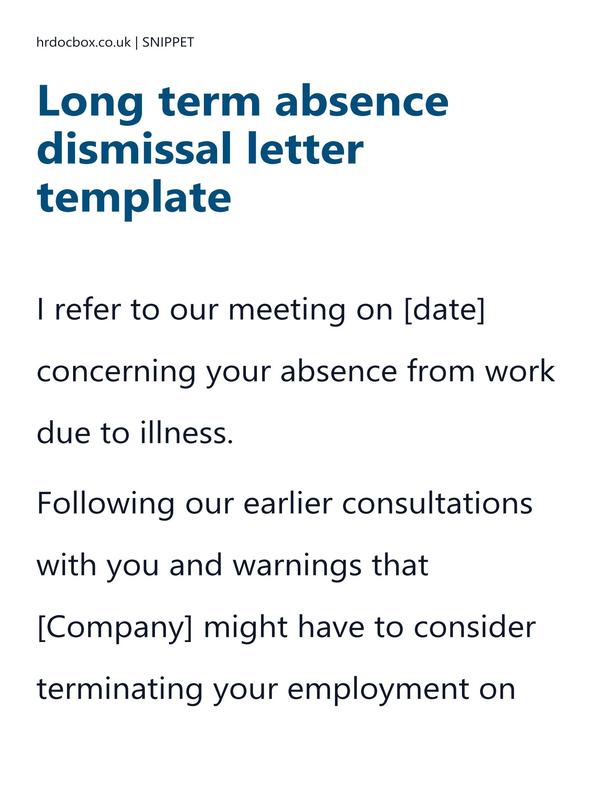
In reaching the decision, we
You've seen 20% of how the Long term absence dismissal letter template is structured. Get the complete editable template instantly and customise it for your organisation.

This letter provides a structured way to confirm a dismissal decision following a prolonged period of sickness absence where the employer has concluded that the employee is unable to return to work within a reasonable or foreseeable timeframe. It is designed to support a fair capability process and should reflect the specific evidence and circumstances of the individual case.
The letter explains that the decision is based on the employee's ongoing inability to fulfil the requirements of their role because of their health and absence. It should avoid presenting the dismissal as a punishment for being unwell and should clearly distinguish capability from misconduct.
The employer can summarise the medical evidence, occupational health advice, expected recovery timescale and any other relevant information considered before reaching the decision. The letter should accurately reflect the evidence available at the time of the decision.
The dismissal decision should demonstrate that appropriate steps have been considered to support the employee's return to work. Depending on the circumstances, this may include reasonable adjustments, amended duties, altered working arrangements, a phased return or alternative employment.
The letter should explain why continued absence can no longer reasonably be accommodated, taking account of the impact on the organisation, the requirements of the role and the likely timescale for the employee's return. Dismissal should be a last resort rather than an automatic consequence of long-term absence.
The letter confirms the termination date, notice arrangements, final salary, outstanding holiday and any other relevant contractual payments. It should also clearly explain the employee's right to appeal and the process for doing so.
Related HR resources and workflow
Explore the HR resources that may be relevant before and / or after using the Long term absence dismissal letter, helping you understand the wider process, maintain appropriate documentation and follow a consistent approach.

A structured meeting script for managers handling long-term sickness absence, helping them hold a supportive and consistent review with an employee while discussing health, progress, workplace support, reasonable adjustments and next steps.

Challenge a dismissal decision formally with a structured appeal letter that explains the grounds for appeal, identifies relevant evidence and requests a review of the employer's decision.
Use these best practice actions, recommended timescales and process stages to understand when and how the Long term absence dismissal letter should be used, helping ensure each step is handled consistently and appropriately documented.
Understand the common mistakes to avoid when using this HR template, helping you reduce risk, prevent unnecessary costs and ensure the process is handled correctly.
Potentially, but dismissal should be a last resort. The employer should consider the medical evidence, the likely timescale for a return, the impact of continued absence, reasonable adjustments and possible alternatives before deciding whether dismissal is appropriate.
There is not a universal requirement to obtain an occupational health report in every case. However, appropriate medical or occupational health evidence can be important when understanding an employee's prognosis, ability to return to work and potential reasonable adjustments.
If the employee is disabled under the Equality Act 2010, the employer must consider reasonable adjustments and should take care not to discriminate because of the disability or because of matters arising from it. Disability-related absence may also need to be treated differently when considering absence management.
The employee should normally be given a reasonable opportunity to attend and respond before a dismissal decision is made. If they are unable to attend because of their health, the employer should consider whether the meeting can reasonably be rearranged, held remotely or dealt with another appropriate way.
Yes. A fair dismissal process should provide an opportunity to appeal. The appeal should be considered impartially and should review whether the original decision and procedure were fair and whether a different outcome is appropriate.
AI can produce generic sickness absence dismissal wording, but long-term absence cases require careful consideration of capability, medical evidence, reasonable adjustments, disability discrimination and procedural fairness. HRDocBox provides structured UK HR documentation designed around practical employment processes and relevant Acas guidance.
How this content is developed and reviewed
The Long term absence dismissal letter template is developed using a practical HR methodology that considers current UK employment legislation, ACAS guidance, CIPD good practice and the real-world HR process it supports. Templates and supporting information are regularly reviewed and updated, with additional reviews triggered by significant changes to legislation, guidance or established HR practice, helping ensure each document remains practical, relevant and suitable for UK employers.
Darryl Horn, Chartered HR Director
Darryl is a Chartered HR professional with over 25 years' experience in senior HR and employee relations roles.
He has extensive practical experience of managing dismissal HR processes and founded hrdocbox to provide businesses with practical, professionally developed HR resources grounded in UK employment law and best practice.
HRDocBox has been creating practical UK HR documents since 2009.
"Darryl provides support and advice with excellent judgement, and has a strong understanding of people, policies and UK employment legislation."
"He is someone I trust; consistent, dependable, and committed to doing things properly."




















Whether you employ 5 people or 50, hrdocbox gives you the structure, documents and expertise needed to manage employees professionally and legally.
Professionally written and fully compliant with UK employment law
Access a free contract template instantly - or save 10% on any document today.
Use this code at checkout for 10% off anything!
Includes instant download, updates, and full access to your HR templates.